Tuesday, June 30, 2009

HMF banding continues

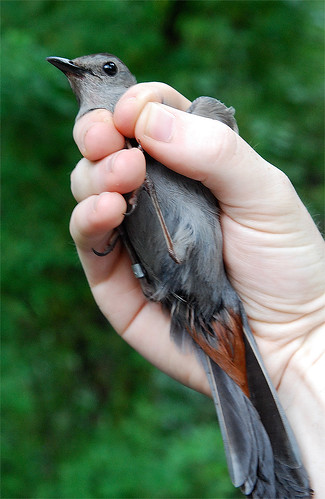
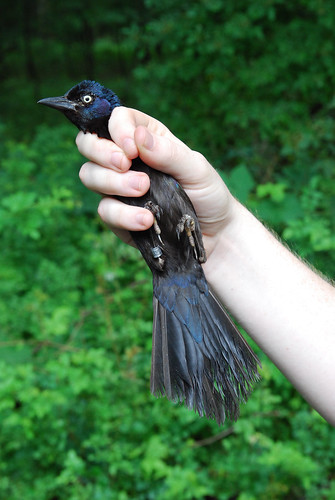
We continue to band birds and collect data over at Hutcheson Memorial Forest. We added a few more species to our list last time out including White-Brested Nuthatch and Common Grackle. I'm still holding out hope for some edge/field birds to sneak into the woods a bit. Indigo Bunting or Prairie Warbler would be really neat.


I was able to handle more of the tasks the last time around. It's still tough getting the birds out of the nets, especially when their wings get all tangled up. Getting them out of the bags and banding them is becoming more natural, so hopefully the untangling will come easier next time out.


We're going to try and get out once or twice this week so hopefully I'll have some more photos and species to share!

Friday, June 26, 2009

Dismal Swamp tour rescheduled

NJ Audubon's tour of the Dismal Swamp has been rescheduled and will take place on Tuesday, July 7th at 7pm. The "Diz" is conveniently located in Edison, NJ.

Check out the Facebook event for more information by clicking here.

Hope to see you out there!

Tuesday, June 23, 2009

Cape May - Spring 2009

I was once again lucky enough to be able to visit Cape May for a week in mid-May to bird. Despite some rain on our first day there, it turned out to be a gorgeous week of weather. We hit all the usual spots - Cape May Point State Park, The Meadows, Reed's Beach, Jake's Landing, Beaver Swamp WMA, Villas WMA, Higbee, and of course Belleplain.

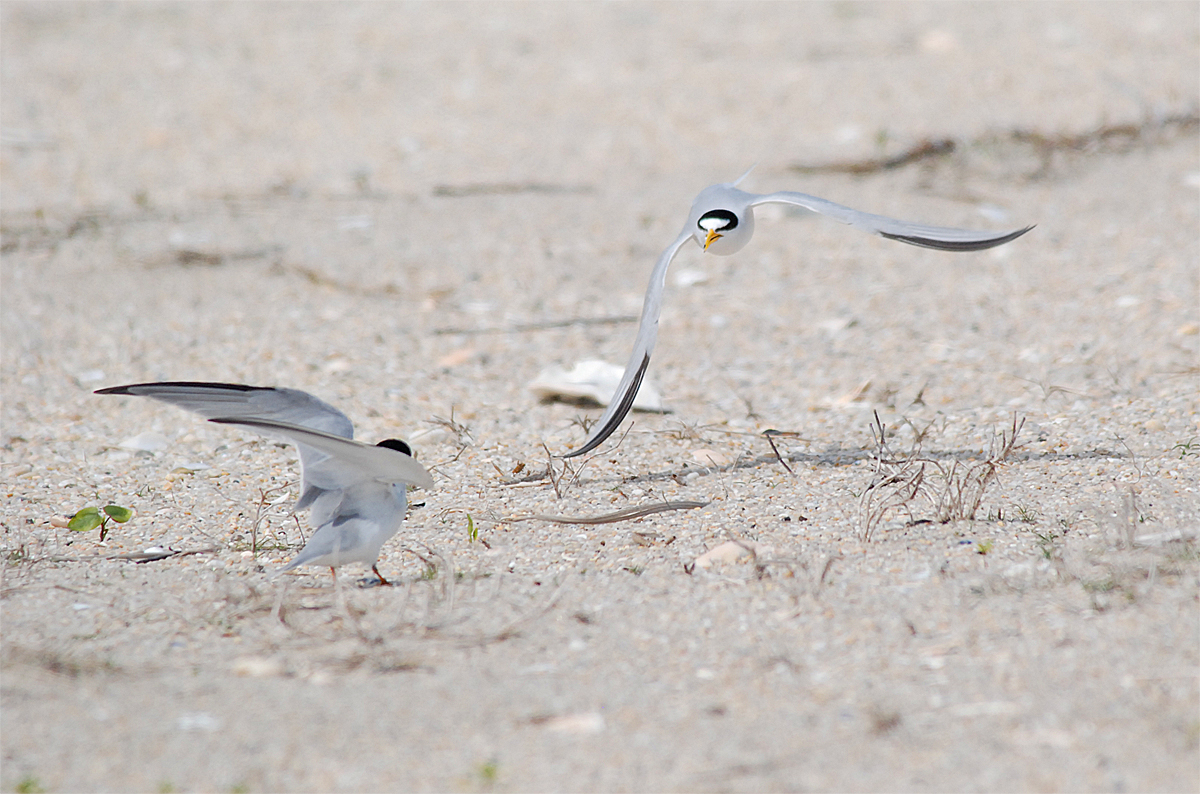
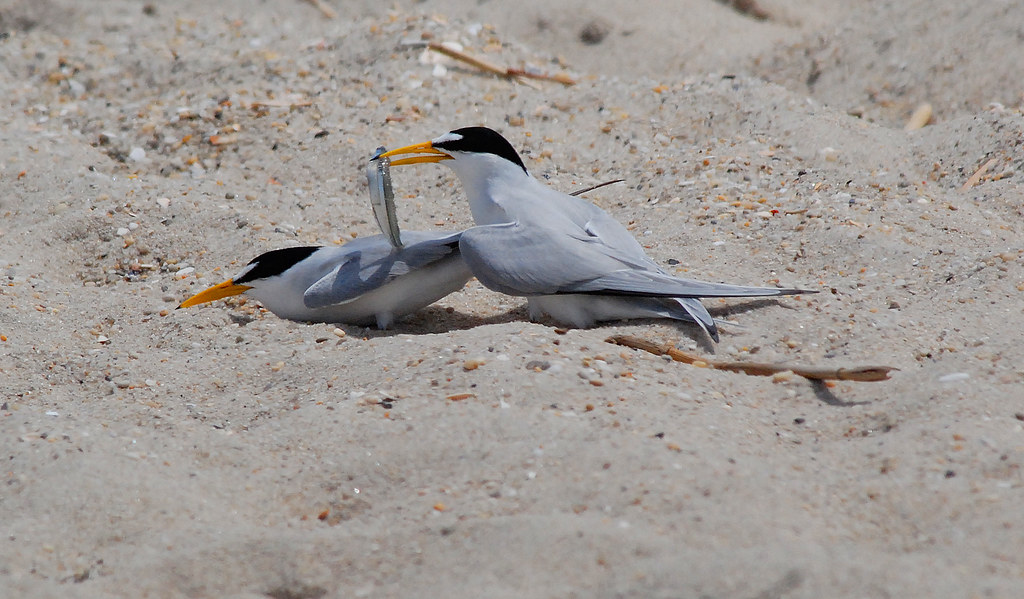
On the beach between the park and The Meadows there were Least Terns setting up territories and beginning to mate. I spent an entire afternoon watching and photographing them.

Territorial Dispute

Love is in the air

Jake's Landing was surprisingly quiet the night we visited, but on the way there Beaver Swamp produced a singing Prothonotary Warbler and some great looks at the Bald Eagles. Reed's Beach was packed with Red Knots and Ruddy Turnstones feeding on the shore. A new location for me this year was Heislerville Wildlife Management Area. Unfortunately the Curlew Sandpipers that had been seen there were nowhere to be found when I arrived, but the trip was far from a waste. The spectacle of tens of thousands of migrating shorebirds more than made up for it. As high tide came in and filled most impoundments, the main impoundment was high enough to resist completely filling. This meant that ALL the shorebirds in the area flew in during high tide to feed and roost. Check out the video I took with my P&S camera (quality isn't great but you can get a sense of how many birds there were):


Higbee produced more mosquitos than birds, but what else is new? Even this poor guy couldn't escape the onslaught:

Pesky mosquitos

A trip down to Cape May isn't complete for me unless I'm able to stop at Brigantine National Wildlife Refuge, which happened twice (on the way down and back up). Despite a horde of insects on the second trip, Forsythe delivered as usual. Clapper Rails were out and about (we saw at least four individuals). We also observed a gull dropping a mussel in the road over and over until he finally appeared to crack it open. He took it off to the side and had himself a little brunch. Some other cool views included:

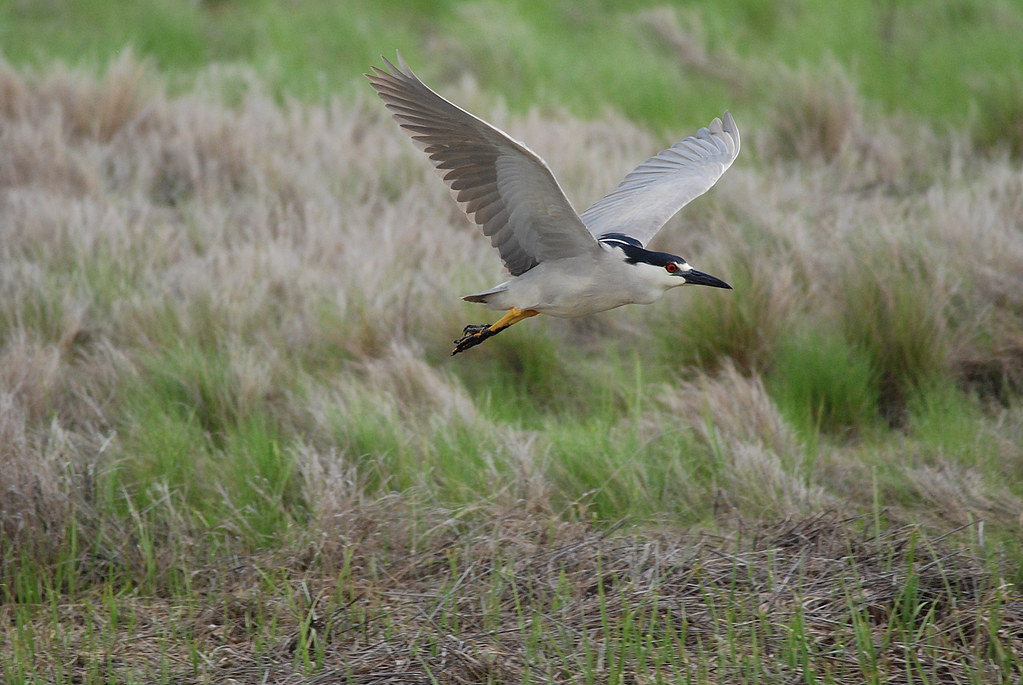
Brigantine Black-Crowned
Black-Crowned Night Heron

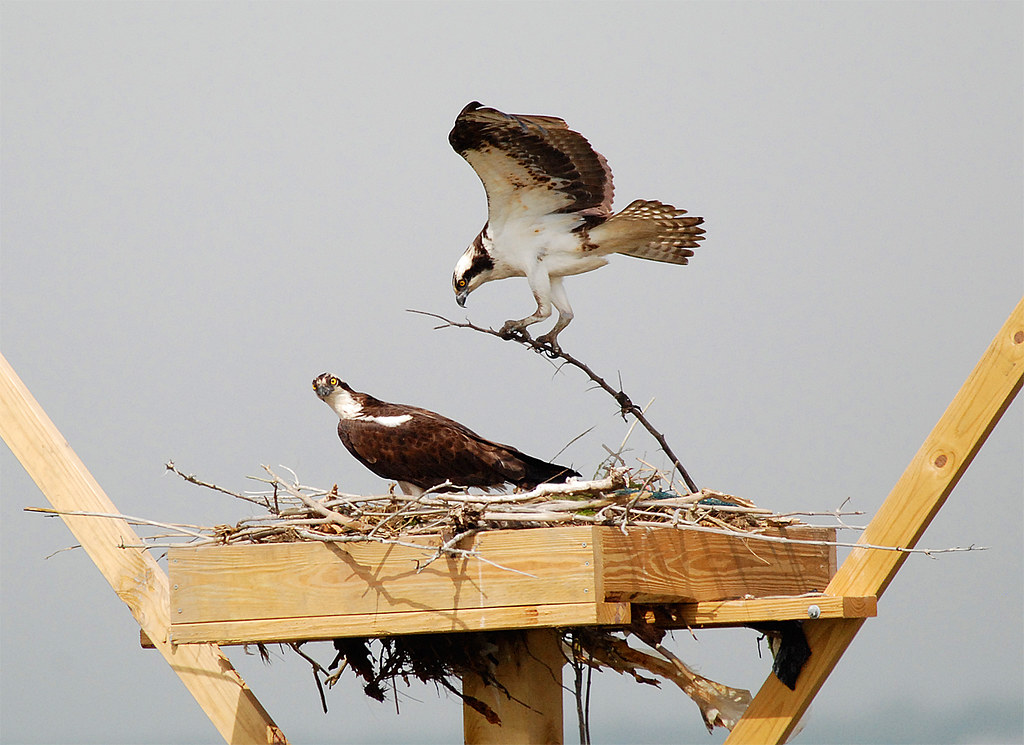
Hard at work
Ospreys building a nest

Cedar Waxwing
Cedar Waxwings

Another great week down in Cape May! Can't wait until next spring!

Tuesday, June 16, 2009

HMF banding commences


Through July 15th, I will be assisting in the banding of birds at Hutcheson Memorial Forest in Somerset County. For those unfamiliar with the location, it is a very unique place and is one of the last remaining tracts of old growth forest left on the eastern seaboard. It is also off-limits to human disturbance and management (outside of once-every-few-months tour groups that walk only on the trails), which is certainly a rare thing in the Garden State. You can read more about it in one of my earliest blog posts, as well as at the Rutgers' HMF website.

By banding these breeding birds (migrants are excluded by the timing of our collection) and recording the available data, we will be able to compare the results with banding statistics from the 1980s. This will ideally shed some light on trends within neotropical migrant populations. It may also help to identify some negative effects that invasive plants may be having on breeding bird communities, as HMF has not been saved from an onslaught of barberry, stilt grass, and a slew of other non-native plants.

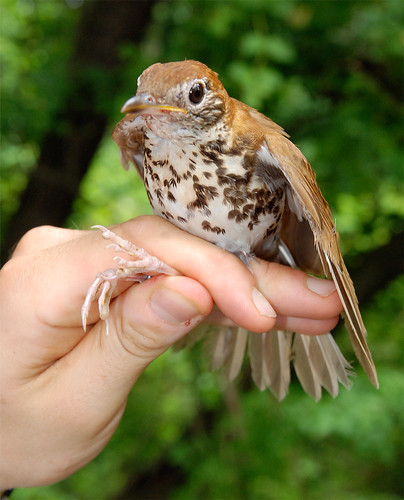
Our first time out, June 13th, was fairly successful. Despite a somewhat late start (5:50am) we were able to set up our 12 mist nets and do two rounds until close to 11am. We caught and banded three Gray Catbirds, three American Robins, two Wood Thrushes, two Blue Jays, a Tufted Titmouse, and an Eastern Towhee. The two Wood Thrush were found in the same mist net, so it is suspected that they may be breeding very close by. We should find out in the coming weeks if we recapture the same individuals.


Unfortunately the weather has been a major limiting factor. It pushed back our first outing twice and our next scheduled banding (June 18th) looks like it may be rained out as well. Hopefully we'll be able to get out at least once this weekend - check back to see what else we get! I've got my fingers crossed for Rose-Breasted Grosbeak, Yellow-Billed Cuckoo, Indigo Bunting, and maybe a Prairie Warbler.

Friday, June 12, 2009

Raritan Bay beaches closed

EPA finds high levels of lead at Raritan Bay sites


A standoff is brewing between local fisherman, environmental groups and state and federal agencies after three beach sites along the Raritan Bay in Old Bridge and Sayreville were closed by the state. Earlier this year, the Environmental Protection Agency found toxic levels of lead, arsenic, copper and other metals in the sand, sea walls and water. Further testing found high levels of lead in sea life like mussels and bait fish near the Laurence Harbor sea wall in Old Bridge. Environmentalists point the finger at National Lead, which operated a 400-acre industrial facility in Sayreville from 1935 to 1982. The company agreed with towns to deposit what is now known to be toxic slag to help support the shoreline. (Two environmental watchdog groups, the Edison Wetlands Association and NY/NJ Baykeeper, have filed letters of intent to sue National Lead, as well as local and state organizations, in federal court for the pollution of the Raritan Bay, although the lawsuit is not related to the slag sites in Old Bridge and Sayreville.) In April, the EPA formally recommended the site as a Superfund site -- a federal designation for the most polluted areas in the country — but local fisherman are frustrated, saying the closures are overkill and will affect local businesses. (Video by Nyier Abdou/The Star-Ledger)

Source: nj.com

Friday, June 5, 2009

Dusk hike at Great Dismal Swamp in Edison, NJ

On Tuesday, June 9th, at 7pm the New Jersey Audubon Society and the Edison Wetlands Association will lead a dusk hike through "The Diz". Here's some information from the Facebook Event page:

"WildNewJersey.tv to host nocturnal wildlife hike in the Dismal Swamp Conservation Area

New Jersey Audubon wildlife experts are leading a public dusk hike of the Dismal Swamp Conservation Area from Edison Wetlands Association (EWA)’s Triple C Ranch at 7 PM on Tuesday, June 9, 2009. Free and open to anyone who enjoys the outdoors, the event is hosted by WildNewJersey.tv and others and is an opportunity to get a guided tour of “The Diz.” The tour will begin at 206 Tyler Road in Edison.

New Jersey Audubon wildlife experts Nellie Tsipoura and Kristin Mylecraine will explore nature in twilight, as diurnal animals find rest and nocturnal animals start to emerge from slumber and start their nightly hunt for food. Animals such as great horned owls, beavers, red foxes, salamanders, and bats may be spotted. Visitors are encouraged to call ahead to confirm their attendance. This hike is a great opportunity to take photos for the annual Dismal Swamp Photography Contest. Bring your camera and/or binoculars. Wear boots or shoes that can get wet and dirty.

The 1,240-acre Dismal Swamp Conservation Area is located in South Plainfield, Edison and Metuchen, and is home to an estimated 175 species of birds, 25 mammals, and 24 amphibian and reptile species including at least a dozen threatened and endangered species. EWA is a grassroots non-profit organization dedicated to protecting human health and the environment in central New Jersey. WildNewJersey.tv is the only daily nature and conservation news source in New Jersey, serving as the most comprehensive online guide to New Jersey wildlife news and videos."

Should be a good time if thunderstorms stay away for long enough. If you haven't been out much this spring, now is your chance! I'll be there hoping for a close encounter with some owls.

Tuesday, May 12, 2009

The World Series of Birding: Reviewed

On Saturday, May 9th, three of my fellow students and I participated in the World Series of Birding. If you're not familiar with the event, it is a race across the state of New Jersey to see or hear as many birds as you can within 24 hours (from midnight to midnight). The event raises a huge amount of money for conservation, whether it is for the Audubon Society or for another worthy cause. We decided to raise money for our graduate student association, the EcoGSA (Ecology & Evolution Graduate Student Association). The EcoGSA provides students with valuable opportunities to present seminars and assists them monetarily so that they are able to attend conferences and put together research projects. Students also help maintain valuable habitat around the state.

To find out more about our WSB team, The Scarlet Knight-Herons, check out our blog at http://knightherons.blogspot.com. The most recent post is an in-depth rundown of the route we took during the event and includes many of the birds we saw along the way.

Here I want to talk a little bit more about the personal experience I had while participating in the World Series of Birding. A cynic might say that the event isn't birding at all, and that it's really just identifying birds as quickly as you can and moving along. Well, on the surface that's probably true. We've already discussed tightening up our route next year so we can see more birds in less time. And it was tough to run away from a singing Golden-Winged Warbler that we couldn't get a look at, or ignore a gargantuan pod of dolphins at Cape May Point (I'm aware dolphins aren't birds but it's still pretty damn cool seeing so many of them so close to shore). We heard some fantastic birds that I've never even seen before, like Cerulean Warbler and Cape May Warbler. Thanks to some birding CDs I'm able to identify them by song, but it felt odd to hoof it back to the car without even trying to catch a glimpse.

If you delve a little bit deeper, though, I think you can get much more out of the event. For one thing, some of the settings you find yourself in are pretty incredible. Sitting at Jake's Landing at 10 p.m. while waiting (and failing) to hear Black Rail, we were surrounded by Clapper Rails and Marsh Wrens vocalizing wildly. In the distance we heard Common Nighthawk, Chuck-Will's-Widow, and Whip-Poor-Will. About 17 hours earlier we stood on the top of Vesper Hill, just as some light was starting to materialize in the haze of early morning, and were hit with a wall of bird song. It was truly an awesome experience. You could pick out individual birds - a wood thrush over there, a cardinal over here - but your senses were almost overwhelmed with how many birds were singing all at once. Later in the day while driving down the Parkway, I could still hear that intense dawn chorus repeating in my head.

While you may not get to appreciate some of the birds in the way that you would like to, seriously competing in this event brings you to the best spots in the state (and even in the country) to see birds. We had a Merlin fly right over our heads only minutes before finding a Least Bittern at Brigantine's Forsythe National Wildlife Refuge. At Cape May Point we observed two Parasitic Jaegers in The Rips, drove for two minutes to the Meadows, and saw both Tri-Colored Heron and Little Blue Heron. In the north we ended up standing in the road observing a swarm of migrating warblers flying overhead, often landing in trees long enough for us to do our thing. We pushed through the forest, collecting ticks and spiders, and were rewarded with a calling Barred Owl. A serious week of birding probably won't produce some of the things you'll see and hear during the WSB.

On a broader scale, it shows us just how many species of birds there really are in this relatively small and densely populated state. The fact that 269 species of birds were seen the day of the event is really spectacular. Most people (non-birders) I talk to about the event don't believe me when I tell them that I saw and/or heard 178 species on Saturday. There can't be that many different species in New Jersey, can there?

The World Series of Birding is certainly a novel approach to the activity, whether one considers it "birding" or not. It's a different way to step into the natural world, to be in awe of the pure numbers of birds out there, and to immerse yourself in the variety of habitats New Jersey offers to try and find them. The WSB is also a powerful tool for raising both awareness and money for conservation, so please help spread the word when next spring rolls around!

I want to thank everyone who supported us and donated to the EcoGSA. Thanks to River Horse Brewery for their unofficial sponsorship of free beer and t-shirts, and thanks to the birding community as a whole for helping to scout out the state and raise awareness for various conservation efforts. Thanks to Tom Reed and family for giving us a place to sleep when we needed it so desperately. And thanks most importantly to my teammates: Charlie Kontos, David LaPuma, and team captain Brian Clough. Whether we were keeping each other sane or embracing the delirium that comes with 40 straight hours without sleep, we were having a blast. Can't wait until next year!