Monday, January 11, 2010

Neighborhood Birding

As most of you probably know, it's been a wee bit chilly here in the Garden State so far in 2010. It's January, yes, so the cold is expected. Still, a little bit of added motivation to get off my butt and outside hasn't hurt. I decided that I would do a photo a day type of thing in 2010 - you can view the Flickr set here. Of course I usually end up taking more than one photo per day...but the rule is I must take at least one. Anyway, on a few occasions I've decided to walk down to the pond at the entrance to our condo development to see what was happening.


The ponds around our development have actually been surprisingly productive since we moved in a year and a half ago. Productive being a relative term and taking into account that we live right off of a very busy section of Route 1 - but we've seen Belted Kingfisher, a number of herons and egrets, and the usual assortment of gulls and waterfowl. Driving by last week, however, I spotted something among the Canada Goose flock in the main entrance pond. After parking and grabbing my camera, I headed back out and took the two-block walk back to the pond. To my susprise, there was a female Bufflehead calmly floating in the middle of it!


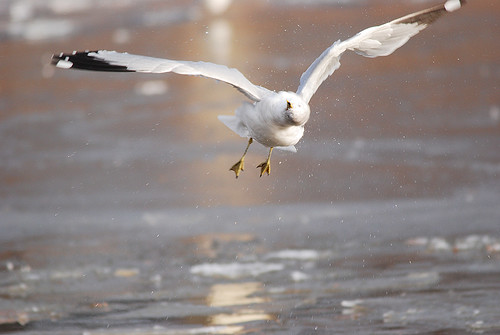
Of course if you want to see Buffleheads during winter, you can travel to any number of spots and reliably find them. To have one in my somewhat urban/suburban neighborhood was a real treat, though. Outside of the Bufflehead, it's been mostly the dreaded Gs - gulls and geese. Sure, there's always the slim chance of a Cackling Goose or an Iceland Gull mixed in, but so far it's been what you would expect. Ring-Billed and Herring Gulls, and lots of Canada Geese.
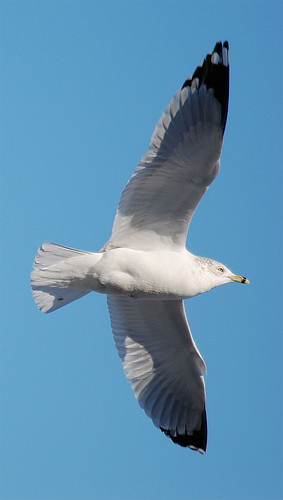
Now, I won't pretend that I appreciate every individual poop-producing Canada Goose and parking lot Ring-Billed Gull. There's just too damn many of the things. When you do stop a take a closer look, though, you realize these birds have just as many cool adaptations and behaviors as your favorite pelagic bird or the most interesting raptor you can find.


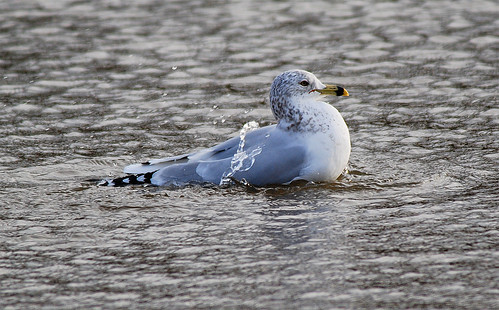
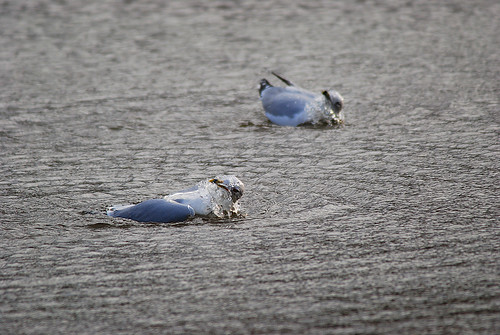
The tightly compressed, oily feathers of gulls keep near freezing water from coming into contact with their bodies. This allows them to swim, forage, and bathe without worrying about the water temperature. It's pretty incredible how the water just glides off their backs.
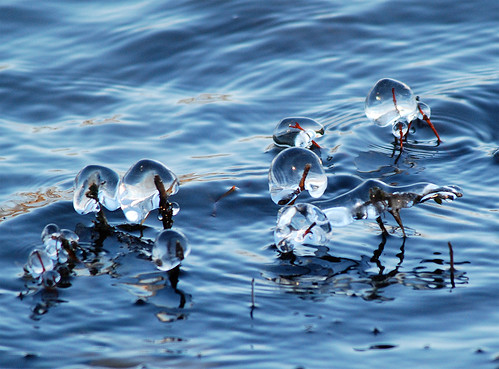
I found these neat "ice balls" as well (photo below). Not sure exactly what's going on here, but for whatever reason it appears the frozen water around the tips of this vegeation stayed frozen while the rest of the ice in this section of the pond melted.

This Friday the forecast is calling for a sweltering 43 degrees, so make sure to get outdoors and enjoy the winter season!

Wednesday, January 6, 2010

Hunters feed the hungry

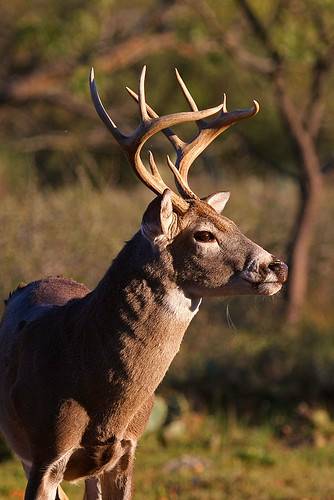
Wild New Jersey has posted a very interesting article with a CNN video about Hunters Helping the Hungry (HHH), a NJ non-profit corporation. Working with local food banks, hunters are able to donate venison to needy families while simultaneously addressing the overabundance of white-tailed deer in the state. Click here to visit the site and read the article.


Photo by huntingdesigns (c) 2009

Monday, January 4, 2010

Shrike Out

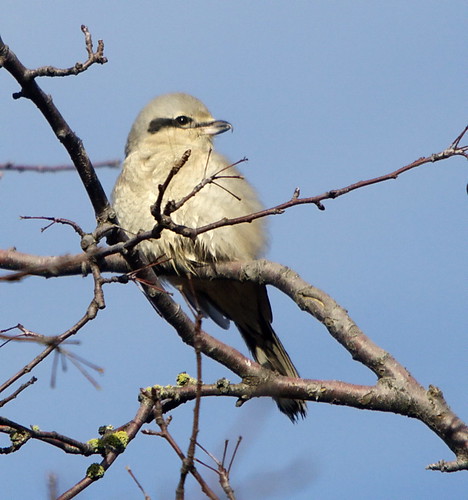
I ventured to the Meadowlands over the weekend to try and find the Northern Shrike that has been hanging out there recently. Shrikes are bad-ass birds, preying on anything and everything they can get their razor sharp, hooked beak on. They often save food for later, impaling insects, reptiles, and even smaller birds on plant spines and barbed wire fences. The day before I took the trip up the Turnpike, the Shrike had been seen feeding on a mouse.

Arriving around 7:30am, I was disappointed to see that all of the water along the DeKorte Park trail was frozen over. It had been cold the last few days, but a few degrees above freezing, so I didn't think such large bodies of water would be totally frozen. After hanging out there for awhile I went over to the nature center and walked one of the boardwalk trails...again, everything was frozen! I couldn't believe it. Even if the Northern Shrike hadn't been hanging around, the Meadowlands is usually a great spot for wintering waterfowl - Canvasback, Ruddy Duck, merganser species, etc.

After returning to Disposal Road I continued to search for the Shrike. Plenty of Song Sparrows flitted about cautiously, and there were a surprising amount of Northern Harriers (one of my favorite raptors). A Merlin even zoomed by and vanished into some tall vegetation on the side of the road. No Shrike, though. After a very cold 4 hours I decided to pack it up.

Photograph by Rick Leche (c) 2007

After arriving home I logged into my email and found a message that had just been sent - "Meadowlands Shrike - YES". The bird had been seen literally 5 minutes after I had left! Five minutes! Boy, oh boy. I can accept a bird not showing up - that's just birding. But a bird coming out 5 minutes after a 4 hour failed attempt? That stings. It does, however, serve as a reminder that birds aren't just out there for us to check off or photograph. They have no knowledge of our hobbies and our obsessions. They're wild animals and they're acting accordingly.


It's a shame the day was such a wash, but the Meadowlands is definitely one of the hidden gems of New Jersey. Tucked away against a backdrop of the Turnpike, a skyline of New York City, and a dump, it's a great spot for raptors, ducks, and plenty of other species.


Thursday, December 24, 2009

Nature's Domain


Earlier this year, Larry and Ray Hennessy launched their new nature photography blog. Their goal was to create an informative blog about nature and wildlife photography, and they've been quite successful. The site creates a community of naturalists and photographers that can share their ideas and their passion by displaying their work. Check out the site at Nature's Domain.

My first post on the site is a brief trip report of my recent trip to Panama's Canopy Tower. It was my first foray into the world of eco-tourism and birding outside of the northeast, and I had an absolute blast. Please check out the post and all of the incredible wildlife I was able to capture. It can be found here. Thanks, everyone!

Monday, December 21, 2009

Christmas Bird Count

If you're not familiar with CBCs, they are all day bird counts in a given area. That could be a town (East Brunswick), a county (Sussex), or any other location you can think up (the Raritan River Estuary). The events this year run from December 14th until January 5th, and you can still get in on many that invite the public or decide to have your own just for fun!

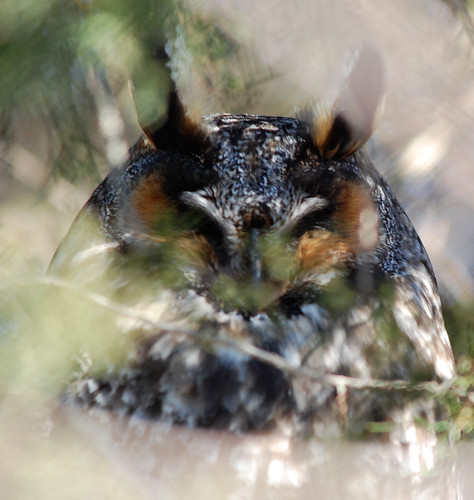
Long-Eared Owl seen in Morris County (c) 2008

The Christmas Bird Count is a great way to get outdoors during the winter season and have a good time. It's also a great way to serve as a citizen scientists; the data gathered during these events may help conservation organizations to determine the health and status of many groups of birds.

Visit Audubon's Christmas Bird Count site for more information! Bundle up and get out there!

Thursday, December 17, 2009

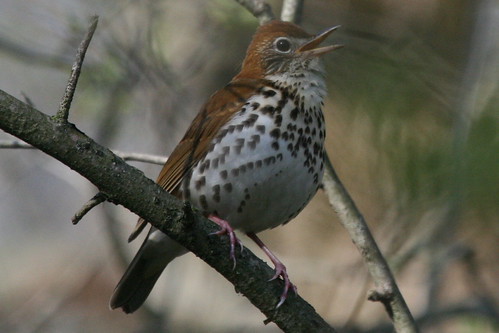
There are a few sounds still which never fail to affect me. The notes of the wood thrush and the sound of a vibrating chord, these affect me as many sounds once did often, and as almost all should. The strains of the aeolian harp and of the wood thrush are the truest and loftiest preachers that I know now left on earth. I know of no missionaries to us heathen comparable to them. They, as it were, life us up in spite of ourselves. They intoxicate, they charm us.

Henry David Thoreau, Journal, 31 December 1853


Photo by Eddie Callway of Birdfreak.com (c) 2008

Monday, December 7, 2009

Ivory Gull continues in Cape May

Ivory Gulls breed in the high Arctic and even spend winters far north of NJ, usually on pack ice in the Bering Sea or off the coast of northeastern Canada. Last winter it was a real treat to have an Ivory Gull as far south as Massachusetts. Last week another individual showed up even further south - right here in New Jersey! The bird has been hanging out at a marina in Cape May, feasting on fish that have washed ashore. On a few occasions the gull appeared to be heading off for good, but so far has returned every day for more easy meals.

Photo by jomilo75 (c) 2007

The above photo is a mature Ivory Gull in its usual habitat. The immature bird in Cape May is mostly white, but has some black spotting on its wings and back. As of December 7th, it was still being seen at Bree-Zee-Lee Marina.

I won't be able to spare the time needed to get down there until December 19th...so if anyone can speak gull, try and convince this young fella to stick around.