"The Great Backyard Bird Count is an annual four-day event that engages bird watchers of all ages in counting birds to create a real-time snapshot of where the birds are across the continent. Anyone can participate, from beginning bird watchers to experts. It takes as little as 15 minutes on one day, or you can count for as long as you like each day of the event. It’s free, fun, and easy—and it helps the birds. We'll be adding updated 2009 GBBC materials as they become available."
http://www.birdsource.org/gbbc
The GBBC is a joint project of the Cornell Lab of Ornithology and the Audubon Society, seeking to track bird populations and learn more about the dynamics of our avian friends. Reports can range from the birds you saw at your suet feeder in the morning to the species-rich list compiled from a day-long trip to Cape May. The GBBC is a great way to help the scientific pursuit of these organizations while giving a great excuse to get out there and bird-watch! Sign up at the site posted above!
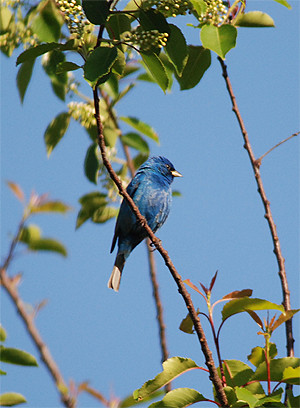
Photograph by Bill Lynch (c) 2008
The Great Backyard Bird Count runs from February 13th to February 16th.
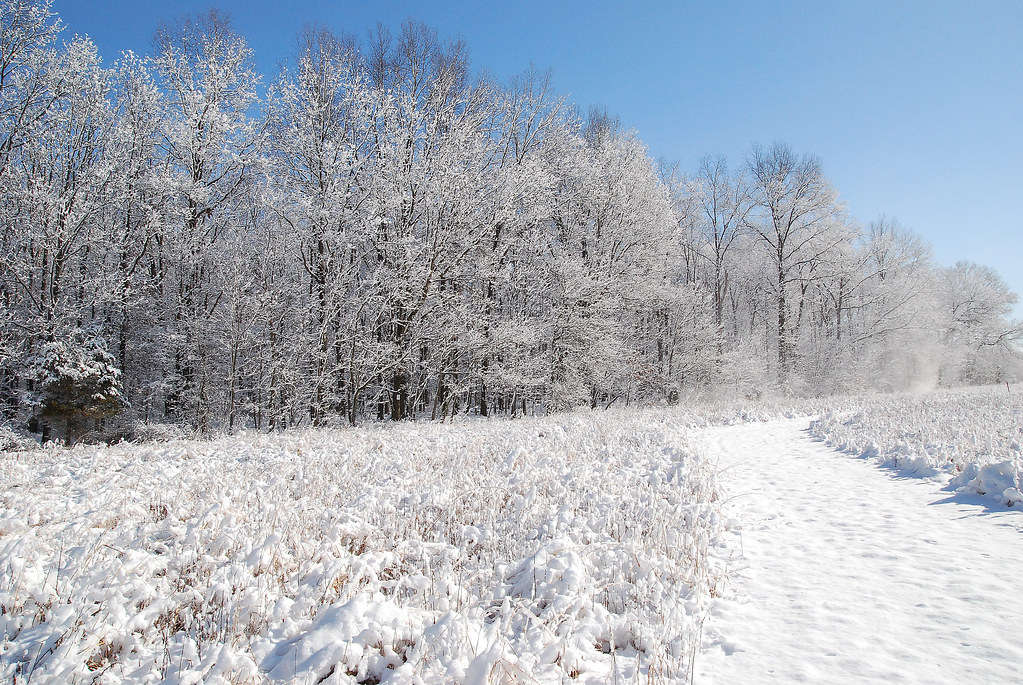
Hope everyone got a chance to get outside this week and enjoy the snow. On Wednesday before work I took the short drive to Negri Nepote Grassland Preserve. Despite the occasional 'blizzard', I can't recall a time when literally everything had snow on it. Every branch, every blade of grass...just everything. It was really neat.
Photograph by Bill Lynch (c) 2009
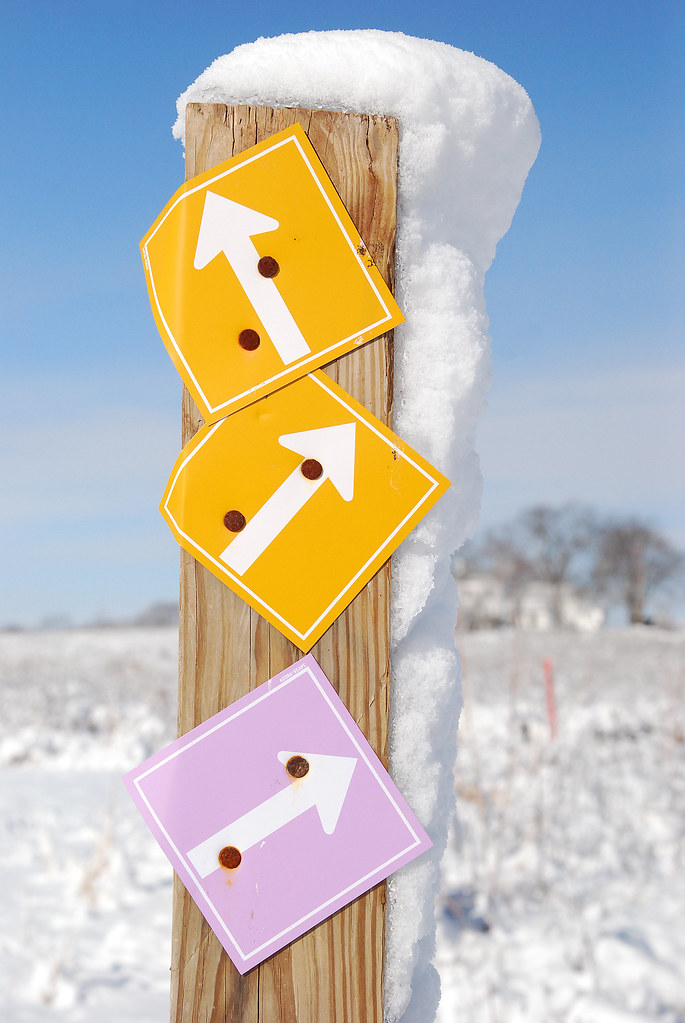
The trail at the grasslands heads out into some fields and eventually winds around into some forested land. It's really not hard to navigate, despite some of the trail markers:
Photograph by Bill Lynch (c) 2009
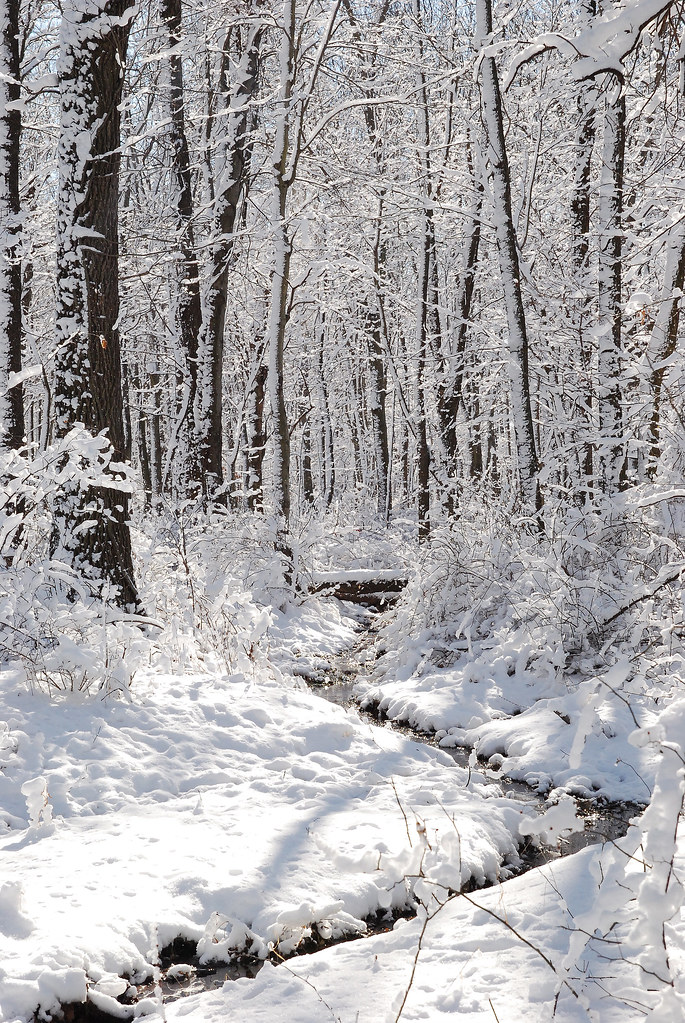
Once the sun had been out for a few hours the birds started to get going. A female Northern Harrier was out hunting along with a Sharp-Shinned Hawk, some Turkey Vultures, and the ever-present Red-Tailed Hawks. The fields and forest edge produced more Dark-Eyed Juncos than I could count, a flock of American Tree Sparrows, Northern Cardinals, Song Sparrows, and even a few Yellow-Rumped Warblers! Taking the trail through the trees produced some remarkably beautiful scenery.
Photograph by Bill Lynch (c) 2009
Eventually the trail reemerges into the fields and winds around near some farmland. At times it seemed as though there wasn't a sound to be heard, until a flock of Canada Geese flew by, or the gentle tapping of a Downy Woodpecker began. It is a truly serene feeling to be able to walk through unspoiled snow and to hear life persist through the cold.
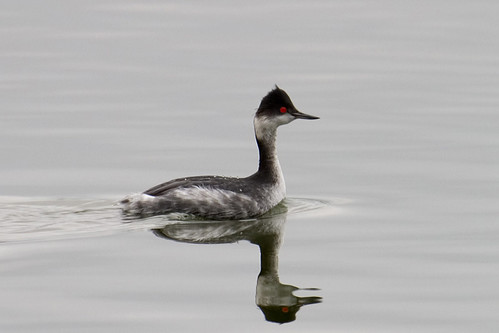
Three of my fellow graduate students and I decided to do some winter birding yesterday. It was unmistakably winter, with wind chills in the single digits at times. We started the day meeting at Round Valley Reservoir to look for the Eared Grebe, which we found quickly with the help of some other birders. A flock of White-Winged Crossbills flew overhead, and we were informed that we had just missed some Common Redpolls. After scanning the scores of gulls and finding an Iceland Gull mixed in with the Herring and Ring-Billed Gulls, we decided to head out and return later when the sun wasn't in such an inconvenient spot (it should have known we were trying to bird-watch!).
Richline Road was our next stop, to search for Crossbills and Redpolls. Unfortunately neither were seen, but some other birds started to become active, including a Brown Creeper and a Hairy Woodpecker.
Moving on to the town of Alpha, we stopped at Oberly Road when we spotted a flock of Horned Larks. Stepping out onto the road, we got a real treat when more and more Larks flew right over us, a few landing within mere feet.
Photograph by Eric Bégin (c) 2008
Off in the distance we spotted a flock of geese. As they drew nearer, we identified them as Snow Geese, and behind the first wave was another...and another...and another. Between 2,000 and 3,000 birds flew over our hands and began to land in one of the fields. It was a spectacular sight to behold (click on image for full-size version).
Photograph by Bill Lynch (c) 2009
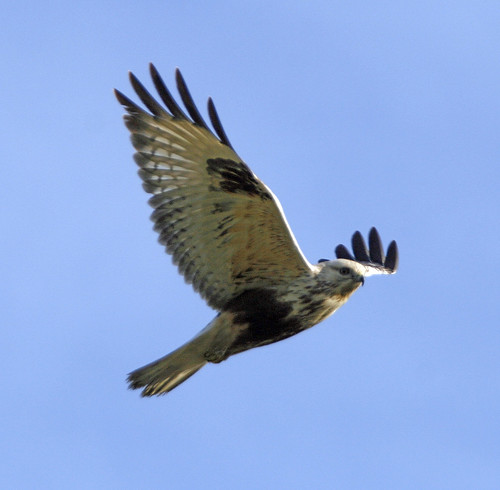
After watching the Snow Goose flock settle in and spotting an immature Bald Eagle off in the distance, we started seeing Rough-Legged Hawks. Both color morphs, including some incredible views of both immature and adult light-morph birds. Each of them slowly moved toward us and hovered about 100 feet over our heads. Certainly one of the highlights of the day.
Photograph by Rick Leche (c) 2007
After a satisfying meal we moved on to Califon to try and find the Barnacle Goose, but had no luck in town or at Spruce Run Reservoir. So we headed back to Round Valley and hiked around the reservoir. In addition to the Eared Grebe from earlier on, we spotted Horned Grebe and a beautiful Red-Necked Grebe sitting only 50 feet off shore. Common Loon, Pine Siskin, Bufflehead, and a single White-Winged Crossbill kept us busy as we hiked back to the boat launch. Not realizing the park closed at 4pm and not at sunset, we had to hike from the far gate 2 miles back to the car. An amusing end to our day, if not a little inconvenient.
There certainly are some exciting winter birds here right now, and it's worth braving the cold to see thousands of Snow Geese, crystal clear views of Rough-Legged Hawks, and much more. So bundle up, throw those binoculars around your neck, and get out there!
I think this photograph more accurately represents just how many geese were hanging out in Alpha (click image for full-size version):
No, this image has not been photoshopped. And no, a female cardinal did not fall sideways onto a recently painted front porch. This Northern Cardinal (seen recently in Illinois) is a gynandromorph, an organism which contains both male and female characteristics. For a brief explanation of how this happens and some more photographs, check out:
Shortly after the nation witnessed history on Inauguration Day, President Barack Obama began his term in office by freezing all federal regulations that had not yet been finalized. This included two key environmental regulations. The first would have loosened air quality standards, while the second would have removed the gray wolf from the endangered species list.
Photograph by Justin Sloan (c) 2008
Many of former President Bush's late-term regulations were unable to be halted by this decision, however, including a major degradation of the Endangered Species Act. Bush and his administration have also opened the path for oil shale development to begin in Western states, for more oil rigs to be placed off our coasts, and for oil and gas drilling near our country's National Parks. Stopping these things will not be as easy, and President Obama has a tall task over the next months and years if he wishes to please environmentalists who expect these decisions to be revoked.
While the current administration has only been in office a few days, many are expecting Obama to quickly begin to turn the country's environmental policies in a new direction. It appears that this has begun, but the newly inaugurated president will have to continue to move forward in the coming days and weeks.
Please continue to write local, state, and federal officials and urge them to act on behalf of our wildlife and the natural world.
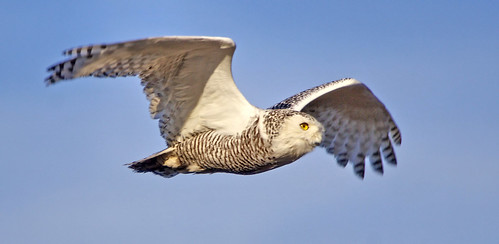
In every season there are a few birds that decide to show up in New Jersey that are not the usual annual visitors.Winter is no different, and this year in the state we have plenty of rarities to chase around.Last year brought Bohemian Waxwings and a Townsend’s Solitaire from the west, along with the more common rarities, whatever that may mean.This winter has been quite a treat so far, delivering a Eurasian (or Common) Teal to the Meadowlands once again, Rough-Legged Hawks throughout the state, more Pine Siskins than you can shake a stick at, and of course a handful of Snow Owls from Liberty State Park and the Meadowlands down through Forsythe National Wildlife Refuge and Stone Harbor.
One of the most popular rarities this winter has been the Green-Tailed Towhee down in Collingswood, NJ.This small passerine exemplifies the term rarity here in the Garden State, as this bird represents only the seventh NJ record of the bird (and the first since 1985!).It has been frequenting a feeder and thankfully the home-owners have been kind enough to allow birders to visit their yard to observe the Towhee.Still, people should act as courteous as possible as well as remain aware of the bird’s state.Disturbing wildlife should not be a part of birding or other wildlife-viewing.
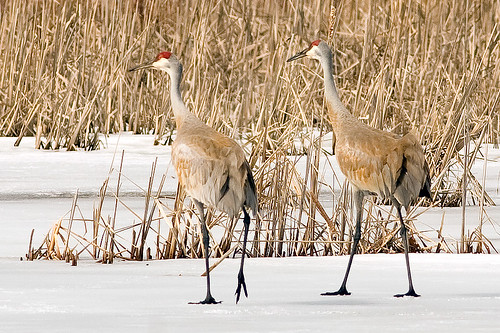
White-Winged Crossbills have been spotted in numerous places as well, along with their northern neighbors the Common Redpoll.While a small group of Sandhill Cranes usually visits the state in winter, a pair has shown up in Franklin Township and due to their miniscule numbers in the state these two have been quite popular as well.They have been scared off multiple times, however, so people should try to remain in their cars and use the vehicles as blinds to help them observe the birds.
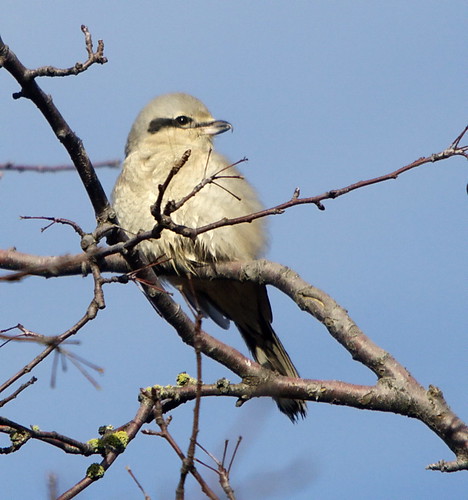
A Northern Shrike has once again shown up at the Great Swamp National Wildlife Refuge, and plenty of people have gotten good views.These songbirds are vicious, and this particular individual has already been seen tearing apart a sparrow.They are known to cache prey for later consumption, hanging them on wires, spines, or sharp branches.Blood will often leave a spattering of red on their breast feathers.
The water, of course, is also a great place to search for rare birds.Thick-Billed Murre was just spotted off the coast of NJ, and other winter rarities have been popping up every few days.Inland, both Eared Grebe and Horned Grebe have been sighted.Winter plumage can be a bit trickier than breeding plumages, but a careful and patient eye can discern between different types of gulls, grebes, and soon.
Right now is an amazing time to head out and go looking for winter waterfowl. New Jersey and the east coast offer a wide variety of different types of ducks, including but not limited to Hooded Mergansers, Ring-Necked Duck, Pintail, Green-Winged Teal, Northern Shoveler, etc. As if this array of web-footed friends wasn't enough, some ducks will also hybridize with other species, offering even more interesting individuals and sometimes very cryptic plumage.
Since the precocious little ducklings feed on their own, the paternal figures rarely stick around to help out. The young follow their mother around but don't need a great amount of care other than the occasional warning or protection from potential predators. Thanks to this family dynamic, male ducks can wander as they please and are often quite promiscuous. Often they will mate with multiple females during a single breeding season, and if they come across a female from a sister species...well, that's fair game too. It isn't entirely common but if you look closely chances are you'll eventually spot a few hybrids. Sometimes it isn't so easy to identify them. It could be a difference in bill or speculum coloration. Other times, however, it quickly becomes apparent that you have a hybrid on your hands. This was the case with the individual pictured below, a mallard x black duck hybrid seen while birding the Meadowlands last week. In this instance one can assume that a male mallard has mated with a female black duck, causing some green coloration in the head feathers.
Photo taken by Bill Lynch (c) 2009
There are plenty of great places to observe ducks right now. DeKorte Park was filled with Pintail and Northern Shoveler last week. The Great Swamp can be a great place to observe Hooded Mergansers and Green-Winged Teal. Visit Sandy Hook for the chance to see Barrow's Goldeneye along with Common Goldeneye, Bufflehead, Red-Breasted Merganser, and many other species. Don't forget about Cape May, Forsythe National Wildlife Refuge, and other Atlantic coast hotspots!








 Posts
Posts



