Thursday, February 5, 2009
Snow Day!
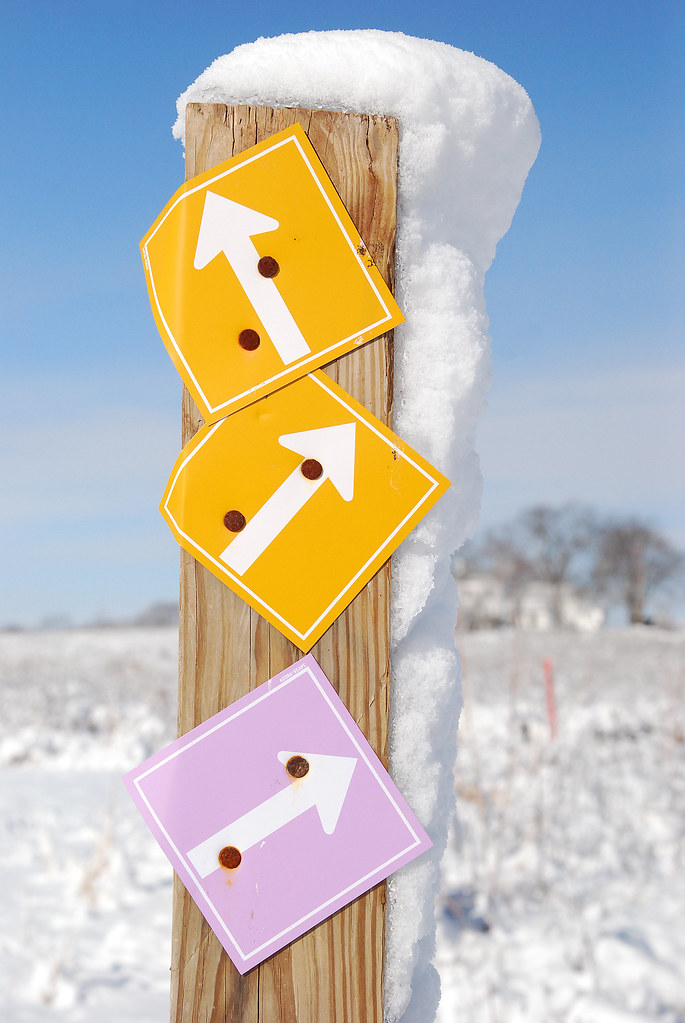
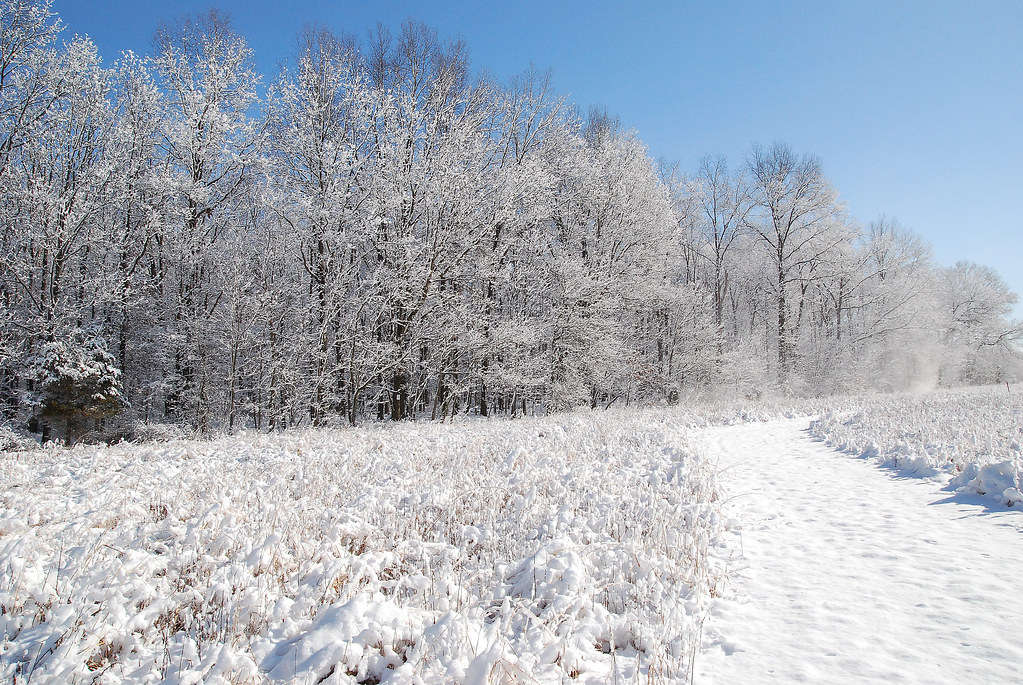
The trail at the grasslands heads out into some fields and eventually winds around into some forested land. It's really not hard to navigate, despite some of the trail markers:
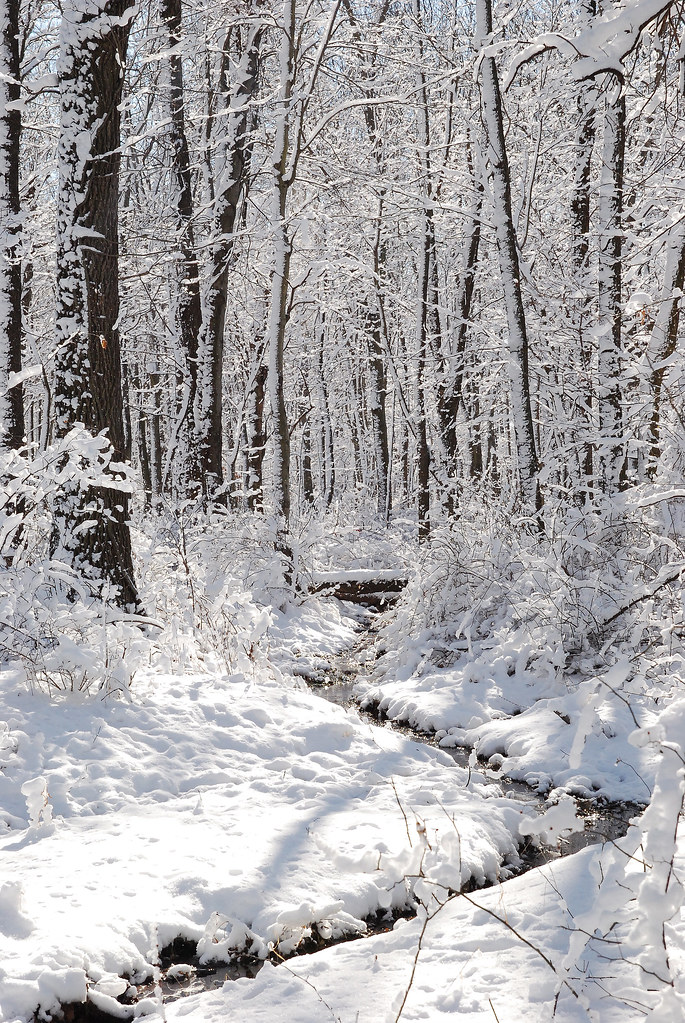
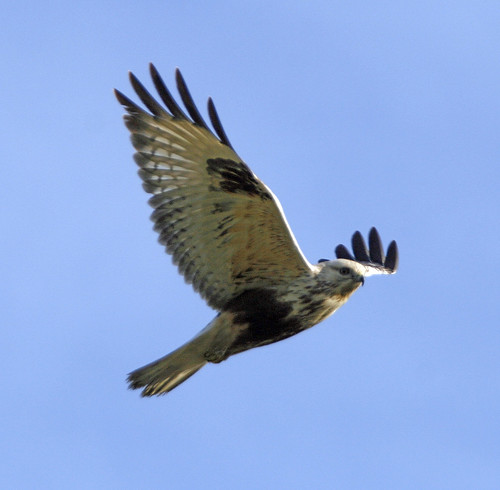
Once the sun had been out for a few hours the birds started to get going. A female Northern Harrier was out hunting along with a Sharp-Shinned Hawk, some Turkey Vultures, and the ever-present Red-Tailed Hawks. The fields and forest edge produced more Dark-Eyed Juncos than I could count, a flock of American Tree Sparrows, Northern Cardinals, Song Sparrows, and even a few Yellow-Rumped Warblers! Taking the trail through the trees produced some remarkably beautiful scenery.
Eventually the trail reemerges into the fields and winds around near some farmland. At times it seemed as though there wasn't a sound to be heard, until a flock of Canada Geese flew by, or the gentle tapping of a Downy Woodpecker began. It is a truly serene feeling to be able to walk through unspoiled snow and to hear life persist through the cold.
Sunday, February 1, 2009
Winter Wonderland!


Tuesday, January 27, 2009
Gynandromorph Cardinal
Photograph by Jim Frink (c) 2009http://minnesotabirdnerd.blogspot.com/2009/01/i-just-received-coolest-bird-photo-ive.html
Friday, January 23, 2009
Early Obama Environmental Moves

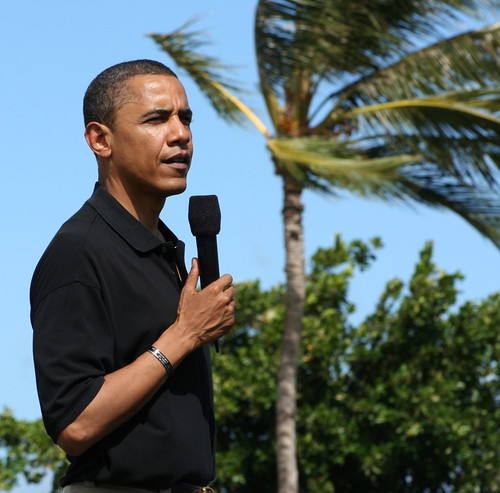
Many of former President Bush's late-term regulations were unable to be halted by this decision, however, including a major degradation of the Endangered Species Act. Bush and his administration have also opened the path for oil shale development to begin in Western states, for more oil rigs to be placed off our coasts, and for oil and gas drilling near our country's National Parks. Stopping these things will not be as easy, and President Obama has a tall task over the next months and years if he wishes to please environmentalists who expect these decisions to be revoked.
While the current administration has only been in office a few days, many are expecting Obama to quickly begin to turn the country's environmental policies in a new direction. It appears that this has begun, but the newly inaugurated president will have to continue to move forward in the coming days and weeks.
Please continue to write local, state, and federal officials and urge them to act on behalf of our wildlife and the natural world.
Tuesday, January 20, 2009
Rare Birds Abound
In every season there are a few birds that decide to show up in New Jersey that are not the usual annual visitors. Winter is no different, and this year in the state we have plenty of rarities to chase around. Last year brought Bohemian Waxwings and a Townsend’s Solitaire from the west, along with the more common rarities, whatever that may mean. This winter has been quite a treat so far, delivering a Eurasian (or Common) Teal to the Meadowlands once again, Rough-Legged Hawks throughout the state, more Pine Siskins than you can shake a stick at, and of course a handful of Snow Owls from Liberty State Park and the Meadowlands down through Forsythe National Wildlife Refuge and Stone Harbor.
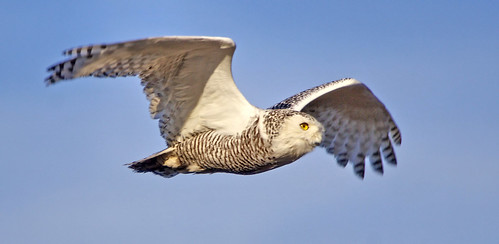
Photograph by Rick Leche © 2007
One of the most popular rarities this winter has been the Green-Tailed Towhee down in Collingswood, NJ. This small passerine exemplifies the term rarity here in the Garden State, as this bird represents only the seventh NJ record of the bird (and the first since 1985!). It has been frequenting a feeder and thankfully the home-owners have been kind enough to allow birders to visit their yard to observe the Towhee. Still, people should act as courteous as possible as well as remain aware of the bird’s state. Disturbing wildlife should not be a part of birding or other wildlife-viewing.
White-Winged Crossbills have been spotted in numerous places as well, along with their northern neighbors the Common Redpoll. While a small group of Sandhill Cranes usually visits the state in winter, a pair has shown up in Franklin Township and due to their miniscule numbers in the state these two have been quite popular as well. They have been scared off multiple times, however, so people should try to remain in their cars and use the vehicles as blinds to help them observe the birds.
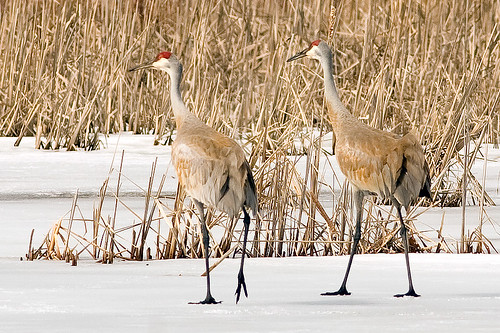
Photograph by C.A. Mullhaupt © 2008
A Northern Shrike has once again shown up at the Great Swamp National Wildlife Refuge, and plenty of people have gotten good views. These songbirds are vicious, and this particular individual has already been seen tearing apart a sparrow. They are known to cache prey for later consumption, hanging them on wires, spines, or sharp branches. Blood will often leave a spattering of red on their breast feathers.
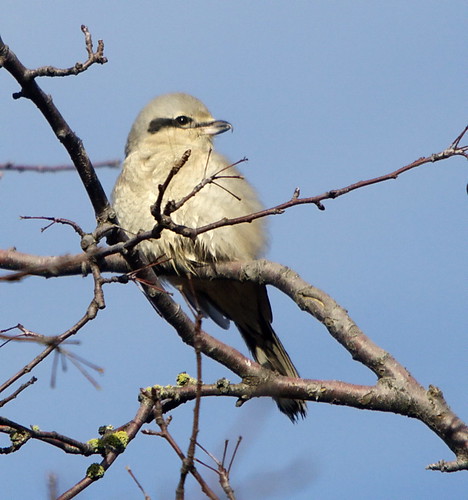
Photograph by Rick Leche © 2007
The water, of course, is also a great place to search for rare birds. Thick-Billed Murre was just spotted off the coast of NJ, and other winter rarities have been popping up every few days. Inland, both Eared Grebe and Horned Grebe have been sighted. Winter plumage can be a bit trickier than breeding plumages, but a careful and patient eye can discern between different types of gulls, grebes, and so on.
Eared Grebe
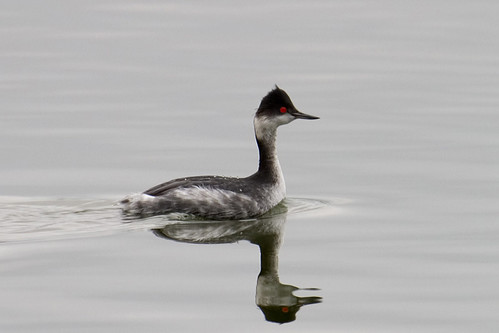
Photograph by Ananda Debnath © 2005
Horned Grebe
Photograph by Len Blumin © 2008
Good birding, everyone!
Friday, January 9, 2009
Hybrid ducks
Since the precocious little ducklings feed on their own, the paternal figures rarely stick around to help out. The young follow their mother around but don't need a great amount of care other than the occasional warning or protection from potential predators. Thanks to this family dynamic, male ducks can wander as they please and are often quite promiscuous. Often they will mate with multiple females during a single breeding season, and if they come across a female from a sister species...well, that's fair game too. It isn't entirely common but if you look closely chances are you'll eventually spot a few hybrids. Sometimes it isn't so easy to identify them. It could be a difference in bill or speculum coloration. Other times, however, it quickly becomes apparent that you have a hybrid on your hands. This was the case with the individual pictured below, a mallard x black duck hybrid seen while birding the Meadowlands last week. In this instance one can assume that a male mallard has mated with a female black duck, causing some green coloration in the head feathers.

Wednesday, December 10, 2008
A Good Owl Year is Bad for Owls
Photo taken by David La Puma (c) 2004

Birders salivate at the chance to catch a glimpse or a photograph of one of these Arctic breeders. Rodent populations are somewhat unstable, and even in a down year with multiple sightings there is no guarantee any individual birder will be able to relocate the bird. So when there are this many snowy owls around it's considered a "good owl year". Unfortunately it's just the opposite for the birds. It's a bad year for them in terms of prey abundance. They have less food, which in turn means less energy. They need to fly further south than they're used to in order to find suitable habitat. That habitat may include dangerous roads, towers, and utility lines that contribute to bird mortality. Birders and other wildlife enthusiasts may flock to the area of a reported sighting putting even more stress on the birds. This is not to say all bird-watchers and nature lovers are only out to get a glimpse of a snowy owl and will stop at nothing to attain their goal. In fact, for the most part these groups (of which I am proudly apart of) are respectful and careful about how they approach and observe wildlife. As in any other group of people, however, there are a few bad apples. People willing to scare the bird and force it into flight again and again so they can get a closer look or capture a dramatic photograph are certainly around.
Being able to observe and appreciate these marvelous creatures is an important reason why so many people support environmental organizations, but education is an integral part of the process. If a bird seems startled or is changing its own behavior due to that of a person, the person is most likely too close. For some birds this distance can be very small. Chickadees will curiously fly to people to investigate. For some birds, though, the distance can be vast. This is usually the case for raptors like owls. They can see great distances and may notice people approaching from up to a mile (or perhaps even more) away. These birds are already under great stress and the added pressure of humans can spell trouble. Snowies have already died this year in Maryland and if trends continue more will suffer the same fate.
It is certainly possible to appreciate the beauty of nature and the fascinating ecology of wildlife without needlessly disturbing and harming it. Become educated on the animals you are watching, act respectfully, and remain aware of their behavior when trying to approach them.